RampNet — Airport operations
A real-time operations platform that helps airport teams track tarmac assets, manage geofences and respond to safety alerts.
UX research · UX design
Aerospace technology
Nasscom Spotlight Award Winner · 2023

Reported system violations, previously 10–15
Fewer violations versus manual recording
Reported maximum monitoring effort
The product.
The people.
RampNet is an airport operations platform developed by Collins Aerospace with Cochin International Airport. It uses connected devices to capture the live location and speed of aircraft and ground assets, giving operations teams a shared view of what is happening across the tarmac.
Safer decisions on a live airport tarmac.
Ground teams were working with live, data-heavy operations where a missed alert or unclear asset status could affect safety and turnaround time. They needed to understand the airport at a glance, identify violations quickly and review what happened after an incident.
Bring assets, alerts and location together.
I explored the needs of airport stakeholders and ground teams, then shaped the information around real-time decisions. The experience brings map context, asset status and operational alerts together so users can move from noticing an issue to taking action without losing context.
Live airport map and asset tracking
Geofence creation and configuration
Contextual alerts and incident playback
Violation, geofence and turnaround reports
From live monitoring to incident review.
The web experience combines an airport map, configurable geofences, contextual alerts, incident playback and operational reports. Asset types and violation states are differentiated on the map, while alerts link directly to the location or recorded session that needs attention.
Map based UI with geofencing
Designed the entire map of the CIAL tarmac , all the different types of assets were represented in icons and provided an easy identification of different assets statuses based on their violations.
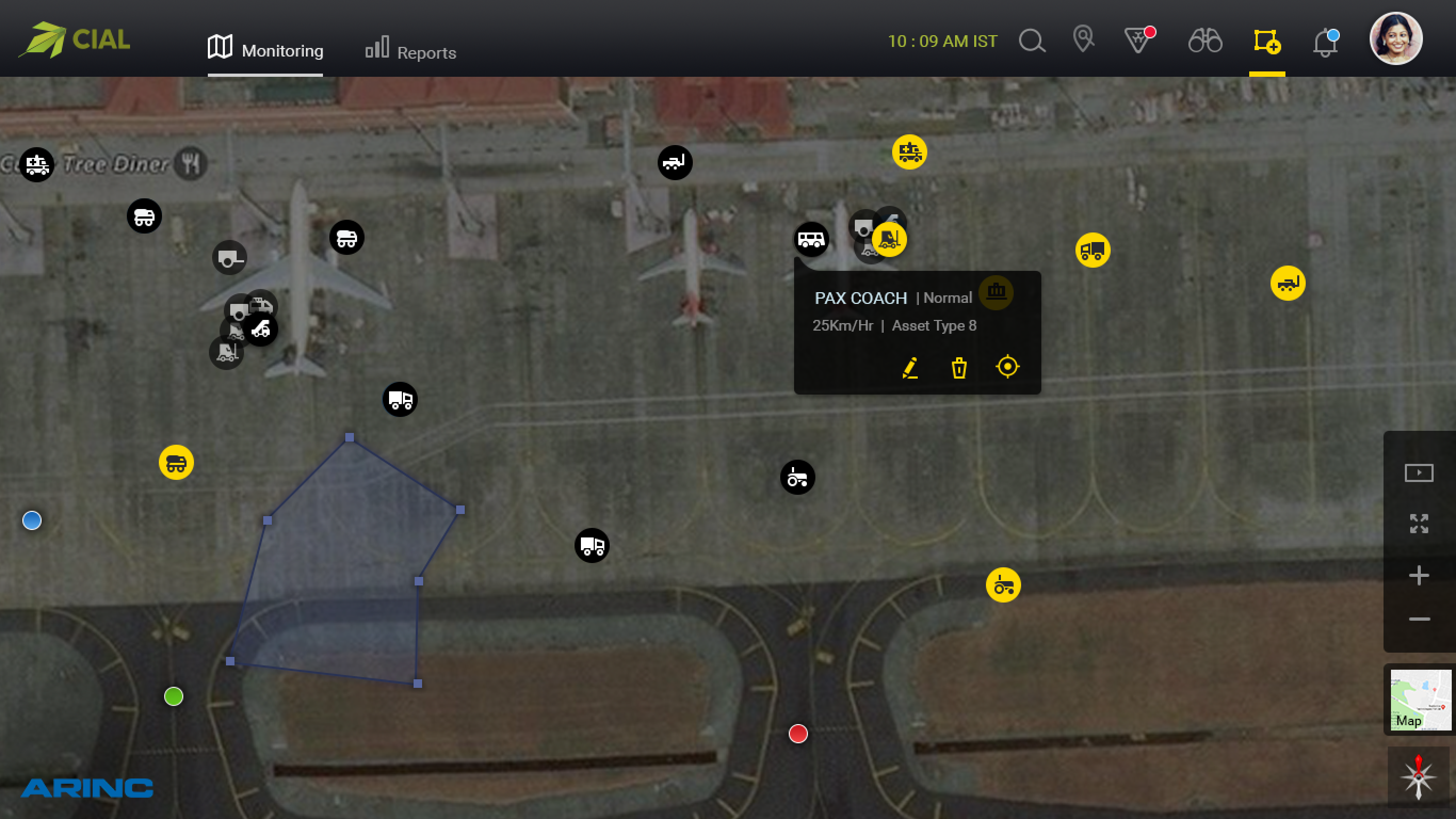
Geofence creation and configuration
Airport Operations users could easily create a Geofence ( Restricted perimeter with rules ) in order to keep the airport tarmac and assets on the tarmac safe, in case of any incidents or violations.
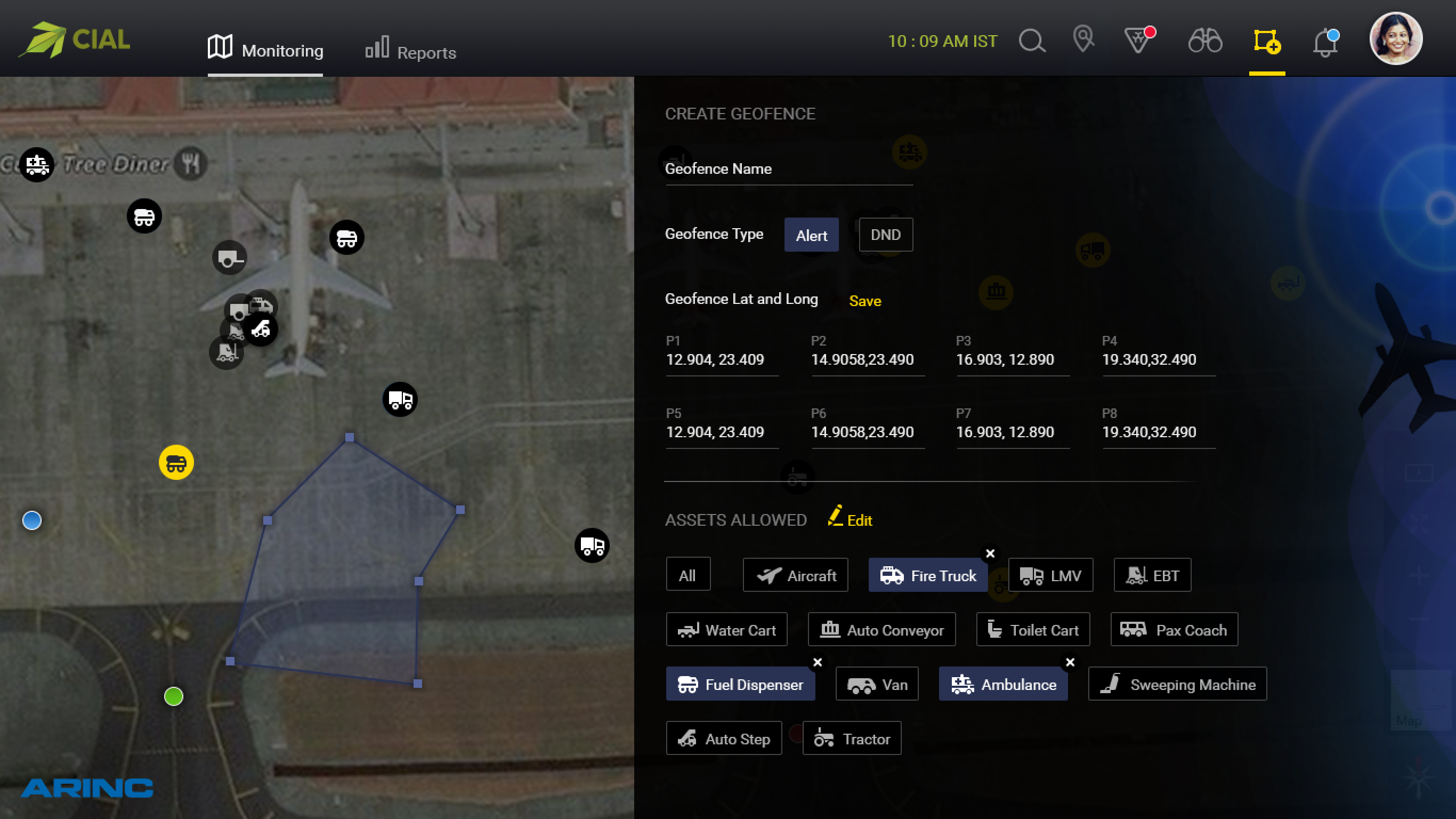
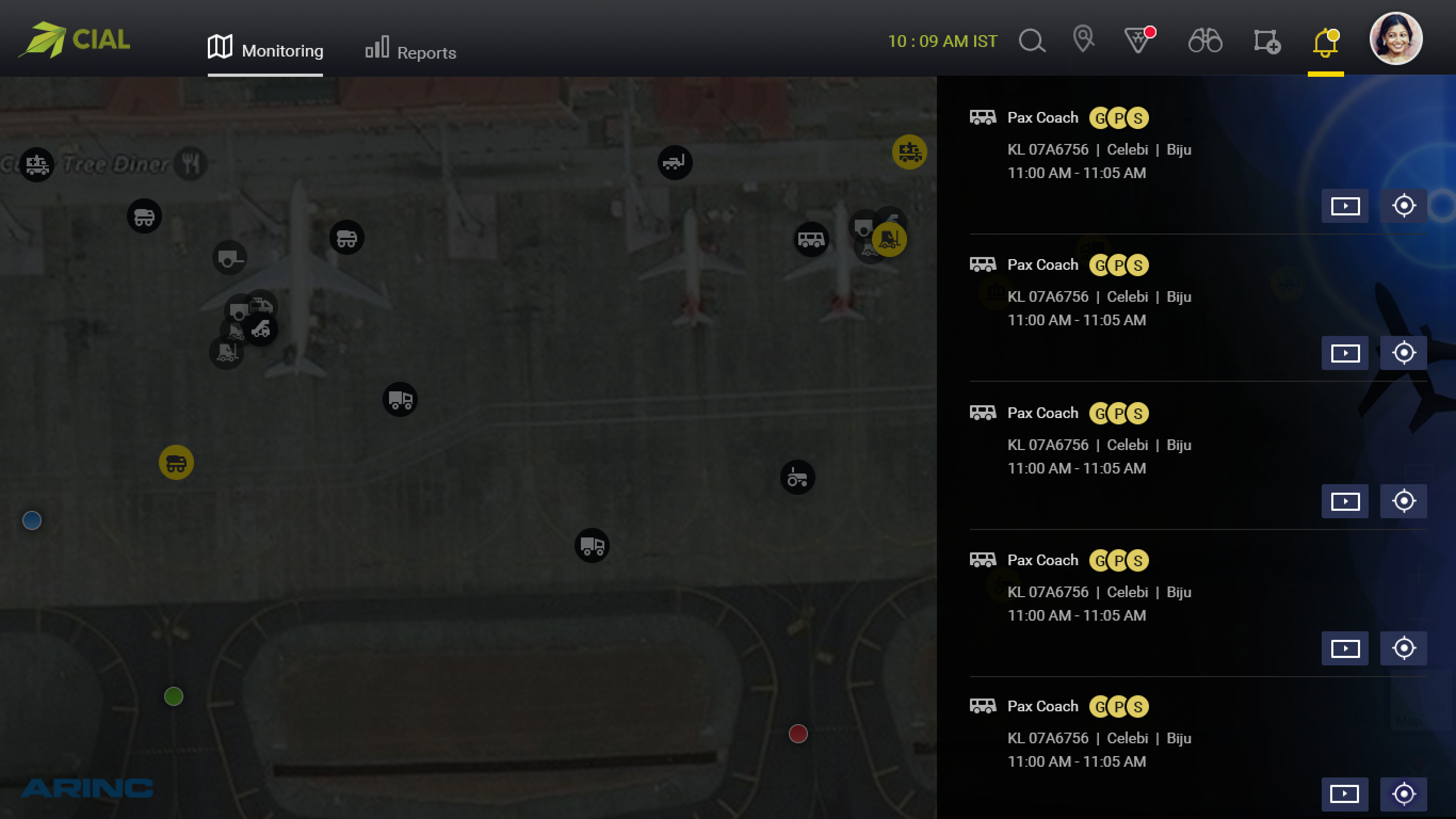
Alert notifications and contextual actions
Since the violations are captured in realtime, the alert notification plays an important role in the operation users day to day tasks. Here in the alert notification list, user will see the list of all violations with the option to pin point the location of the asset on the Map or view the incident playback from the recorded session.
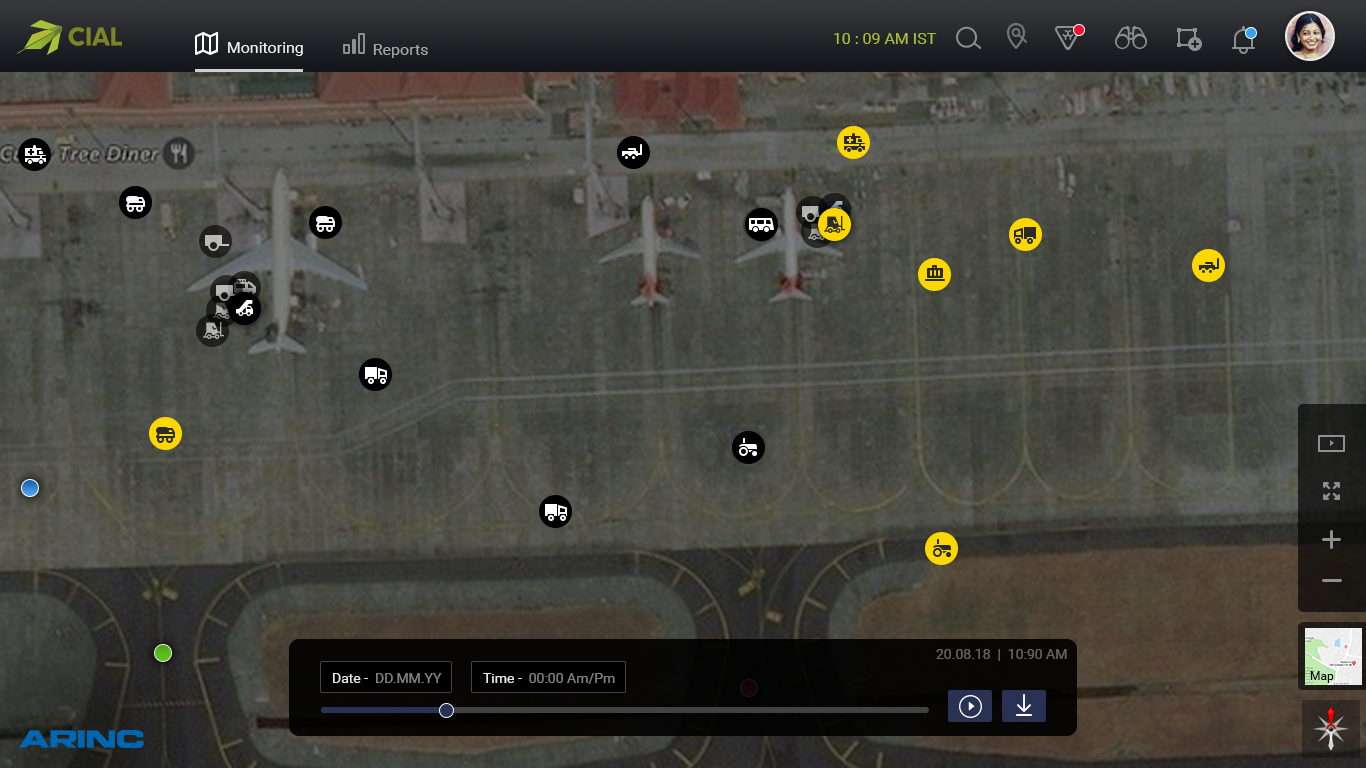
Incident Playback
Users can go back in time to view a particular incident or violation session using the playback feature. It allows the users to identify the violation details and take necessary actions.
Designed to make
progress visible.
The team reported an average of 0–3 system violations per day, down from 10–15; 30% fewer overall violations compared with manual recording; and monitoring effort reduced to a maximum of 36 hours from three days.