Loan workflow orchestration
Turning fragmented tasks and dynamic priority scores into clear, actionable lending workflows.
Senior UX designer · Research, interaction design and prototyping
Enterprise UX · Lending operations
Selected project
Dashboard, Task Pipeline and Loan Priorities refactored
Loan score plus role score informs prioritisation
High-fidelity prototype evaluated with operational users
The product.
The people.
An anonymised JPMC home-lending case study. Lending operations teams needed to identify urgent work, understand why loan priorities changed and investigate the relevant loan information. The existing experience distributed these decisions across dense modules, repeated information and multiple navigation steps.
Senior UX designer · Research, interaction design and prototyping
I refactored the Dashboard, Task Pipeline and Loan Priorities experiences and designed the unified loan-details overlay. I created and iterated wireframes and high-fidelity prototypes for search, filters, role-based views, priority explanations and loan context. I worked through frequent product and design reviews, balanced existing component and performance constraints, and tested the high-fidelity prototype with operational users.
PROJECT STAGE
High-fidelity prototype tested with operational users. Quantified usability improvements were not verified.
A priority score is useful only when people understand it.
Users could access loan data but struggled to turn it into a clear next action. Scores changed with loan fields and milestones, while supervisors needed to distinguish starting workloads from intraday arrivals and identify at-risk work. A single, information-heavy table could not support all of those needs without increasing cognitive load.
Separate finding work, explaining priority and investigating context.
I used research notes, operational user stories and stakeholder reviews to map the decisions behind the interface. The priority model combined loan-level and role-level scores. I explored information hierarchy, score history, filters and a consolidated loan summary, then iterated within the enterprise design system and performance constraints around large employee datasets.
Expandable rows explain priority score contributions
Interactive score chart and event history
Contextual loan-details side drawer
Search, filters and role-based work visibility
Three connected modules. Two levels of disclosure.
The Dashboard establishes workload awareness. Task Pipeline supports search, filters and role-based task visibility. Loan Priorities explains ranking through expandable rows showing score breakdowns, with an interactive chart and event history for changes over time. A separate slide-in loan-details drawer provides broader operational context. The key design pivot was to keep priority explanations inline while moving extensive loan details out of complex expandable tables.
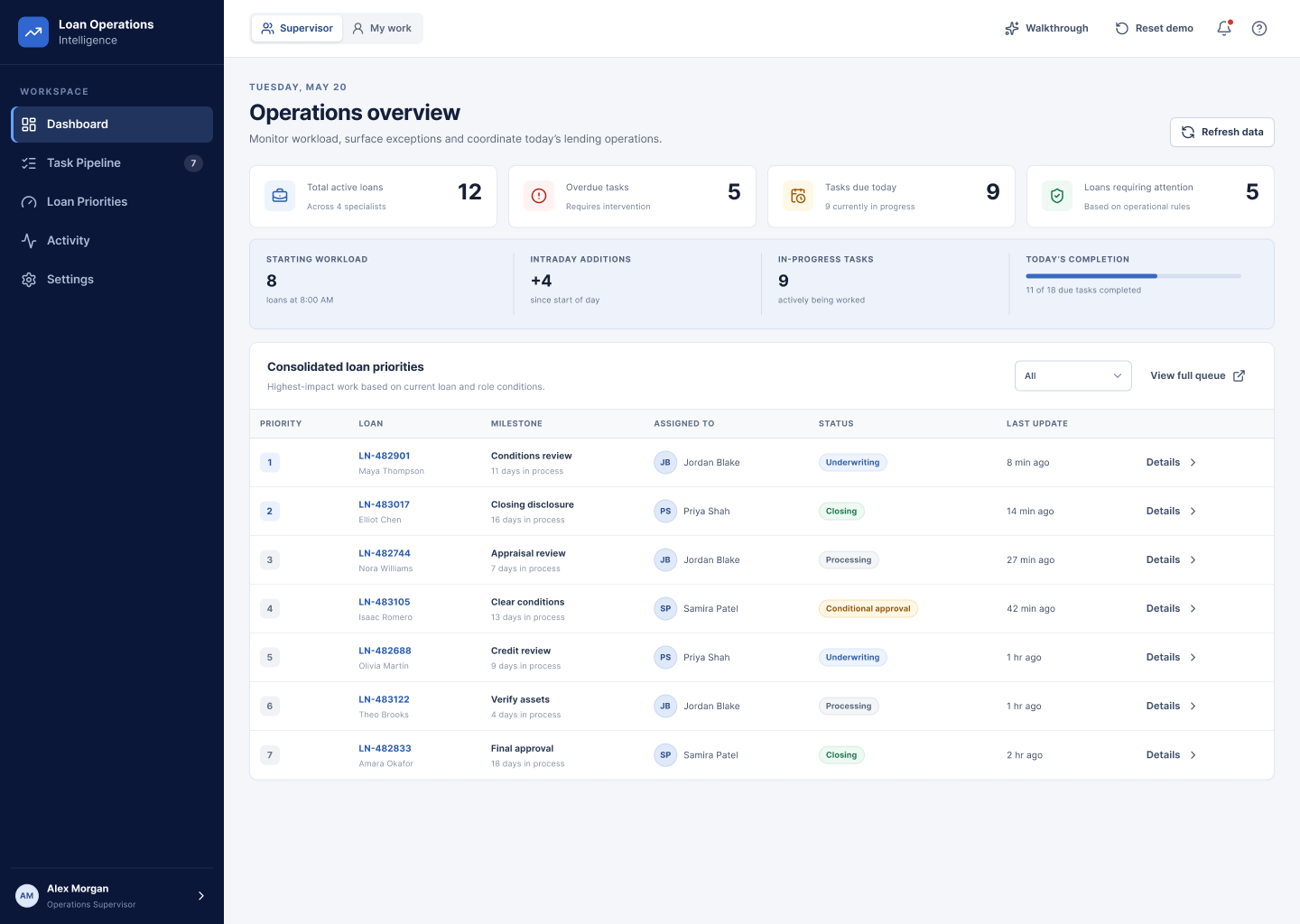
Workload awareness before task execution
The dashboard brings workload and priorities into an operational overview. This portfolio prototype uses demonstration data.
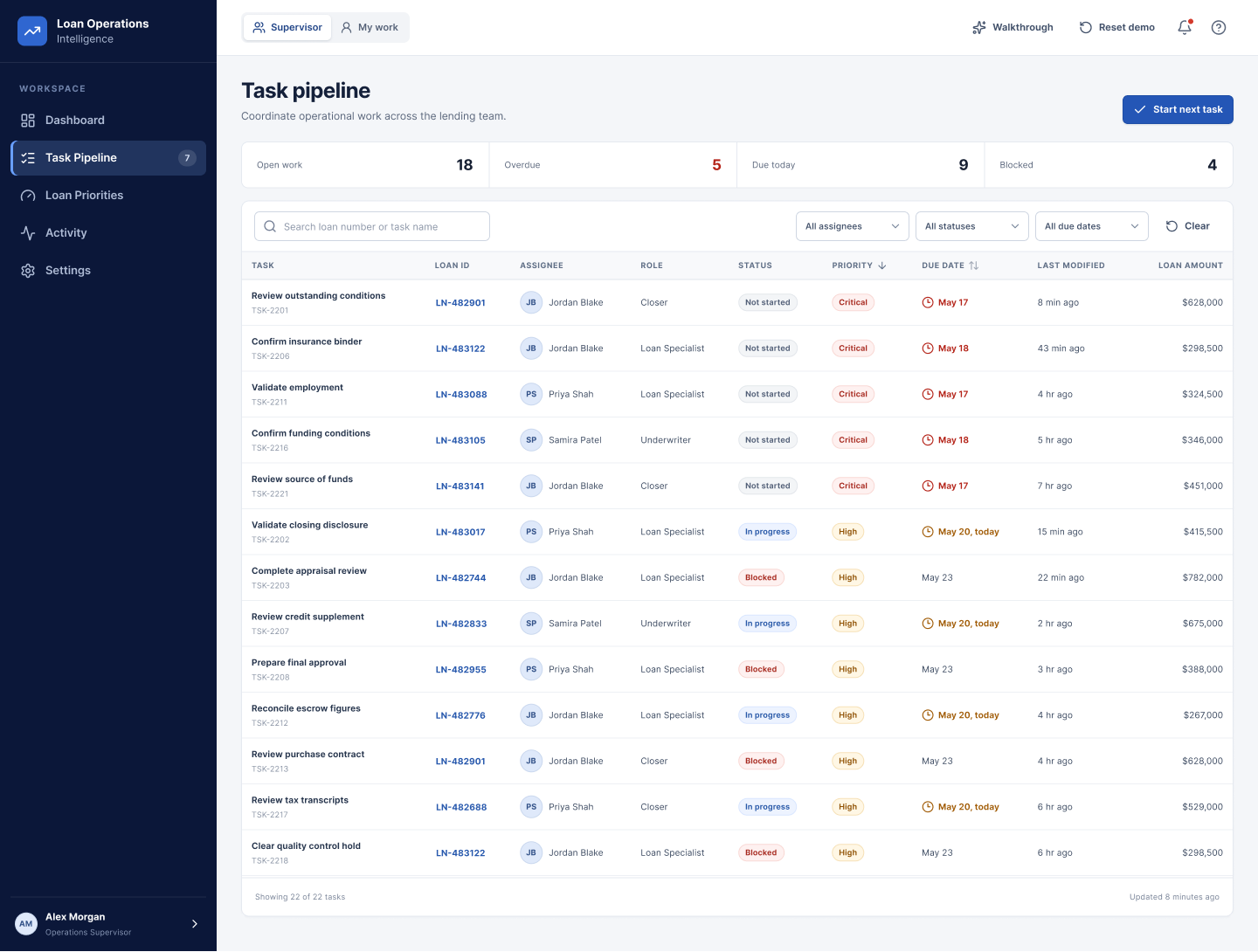
A searchable, role-aware task pipeline
Search, filters and role-based views help operational users locate work. These interactions were part of my confirmed design scope.
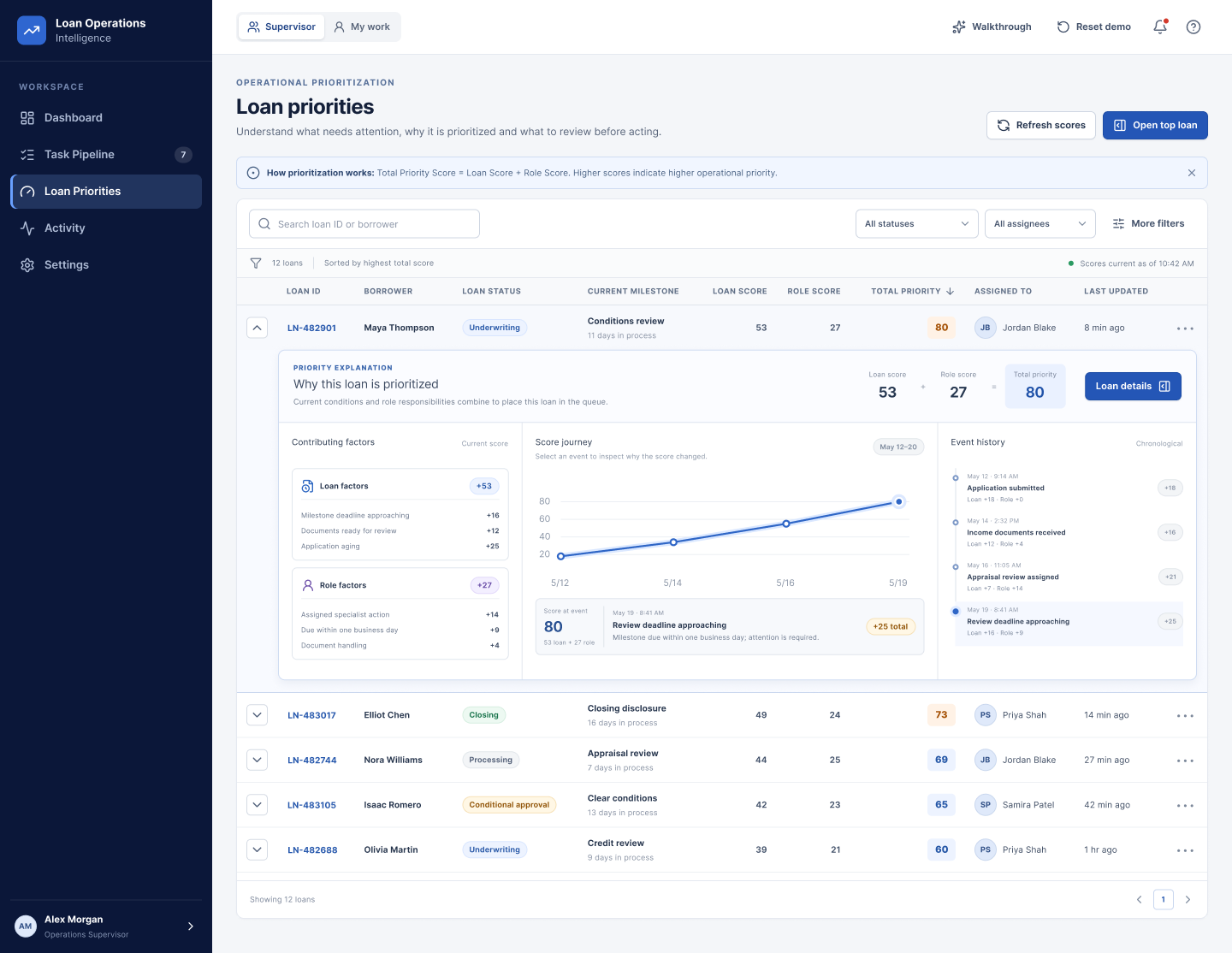
Explain the score without leaving the table
Expandable rows reveal the loan and role score contributions. An interactive chart and event history explain changing priorities; both were confirmed features of the high-fidelity design.
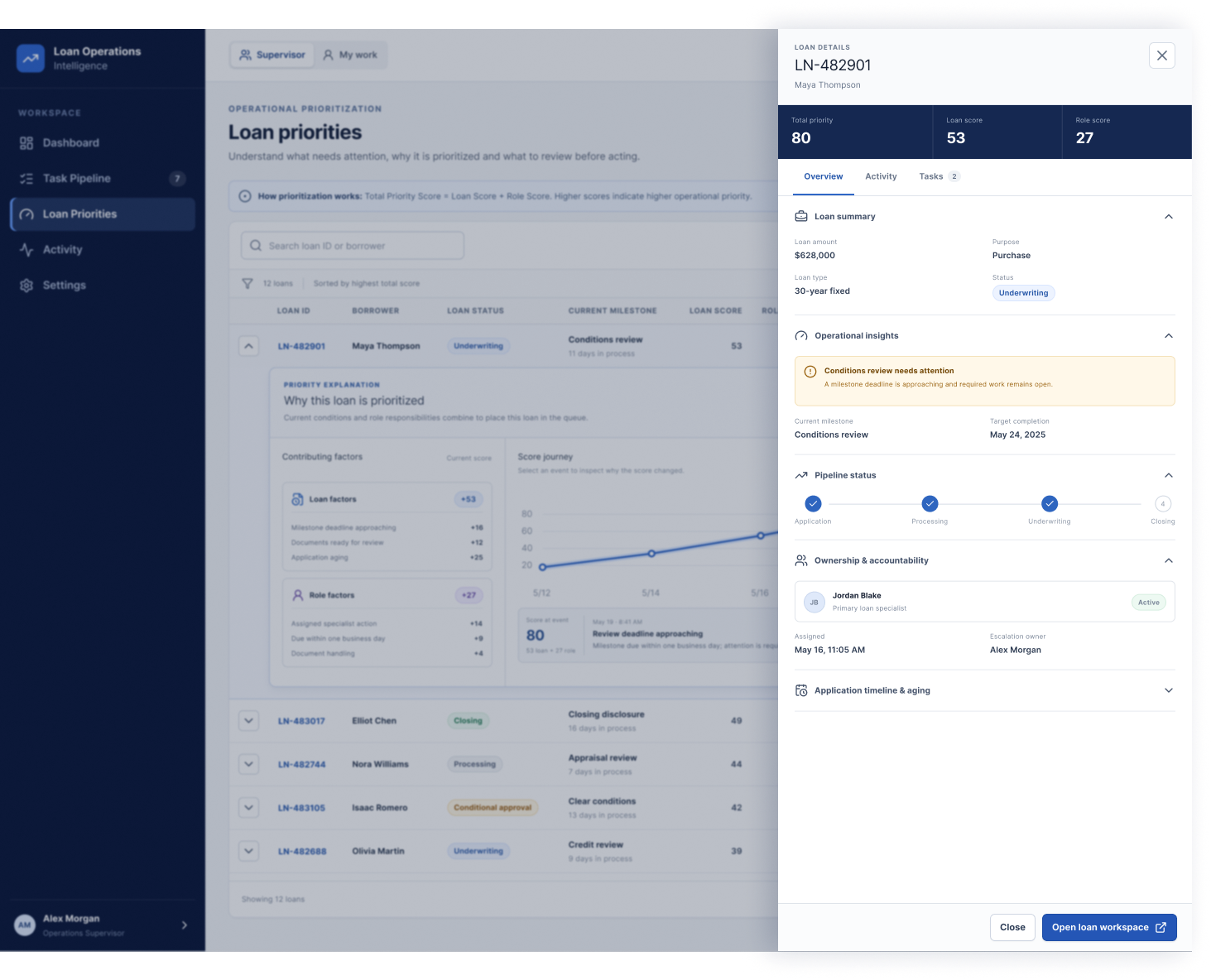
Investigate loan context in a side drawer
The final loan-details direction uses a slide-in overlay. Priority explanations stay inline, while broader loan context lives in the drawer. This separates two information needs and avoids overloading the table.
Designed to make
progress visible.
The initiative produced UX refactoring across three core modules and a unified loan-details interaction. The high-fidelity prototype was tested with operational users, and qualitative stakeholder feedback described the direction as cleaner and easier to use. Participant counts, detailed test findings and quantified productivity improvements were not verified. Availability and response-time figures in the broader programme were platform targets, not design outcomes.