AI-assisted collateral review
Designing an explainable appraisal-review experience that keeps evidence visible and human judgement in control.
Senior UX designer · Discovery and MVP experience definition
AI · Financial services
Selected project
Evidence and confidence support the reviewer’s decision
Discovery, requirements alignment and experience definition
Projected monthly manual-review savings; not a measured result
The product.
The people.
An anonymised JPMC home-lending case study. An in-house computer-vision capability was proposed to assist appraisal image review and reduce manual effort and external vendor dependency. The experience needed to work across review tiers while preserving explainability and auditability.
Senior UX designer · Discovery and MVP experience definition
I led UX discovery and helped define the reviewer experience and MVP scope. I brought operations, valuations, product and technology partners together to understand review pain points, align requirements and translate the business ambition into a reviewable workflow. My focus was balancing automation with reviewer confidence, evidence visibility and auditability.
PROJECT STAGE
Discovery and MVP experience definition. Screens shown are Figma portfolio reconstructions, not original production screenshots.
How do you make automated findings reviewable?
Automating the identification of appraisal issues did not remove the need for professional judgement. Reviewers needed to understand what had been flagged, inspect the supporting evidence and determine an appropriate response. An unexplained AI output could introduce uncertainty rather than reduce work. The design problem was to make machine-generated findings useful without obscuring accountability.
Start with the reviewer’s decision, then introduce AI.
I organised discovery and stakeholder-alignment sessions around user pain points, the operational review process and business goals. I translated that understanding into an MVP direction centred on findings, supporting evidence, confidence information and traceable review decisions. I considered the needs of different review tiers and treated explainability as part of the core workflow.
Reviewer-centred discovery and cross-functional alignment
Findings and supporting evidence in a shared workflow
Confidence and rule or model-version context
Human review decisions and auditability
Evidence beside the finding. Judgement with the reviewer.
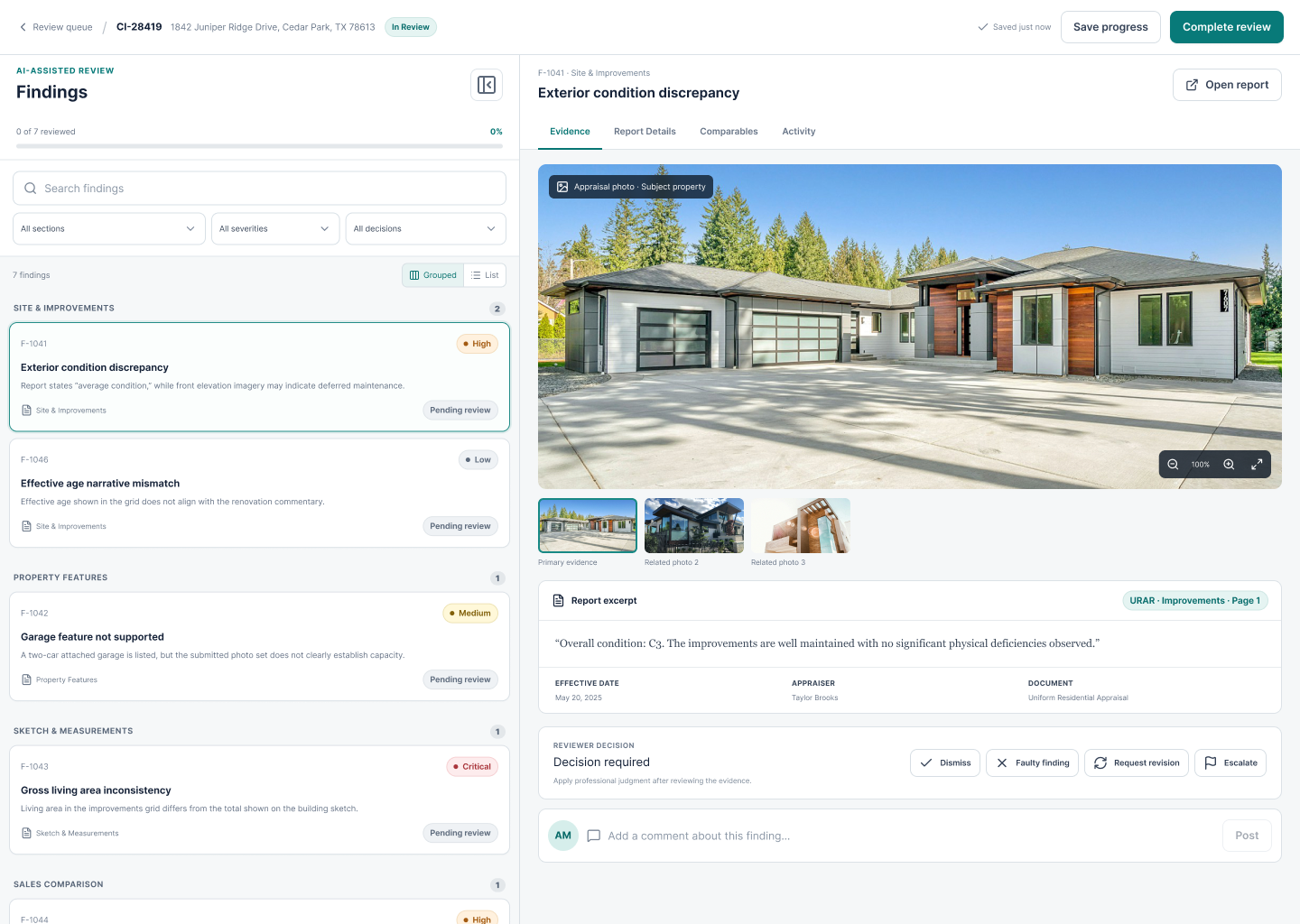
The experience moves from identifying a review to investigating its findings, inspecting evidence and recording a human review decision. Findings and evidence form the centre of the workspace, while confidence and rule or model-version information provide context for interpretation. The portfolio prototype screens explain this direction; detailed screen behaviours are reconstructions rather than claims about a shipped production interface.
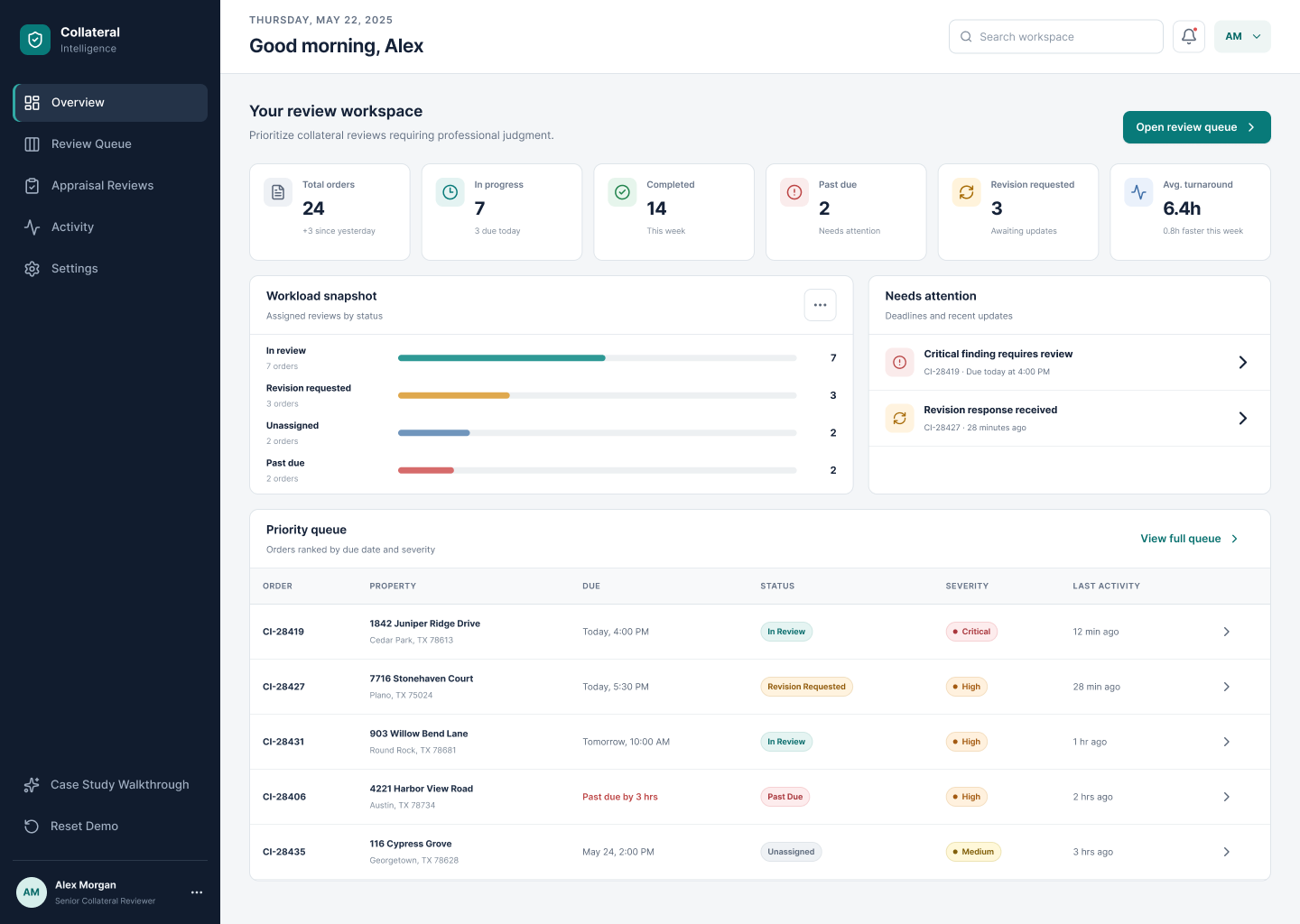
A workload overview that leads into review
The overview makes review workload and items requiring attention visible before the reviewer enters an individual order. Figma portfolio reconstruction with demonstration data.
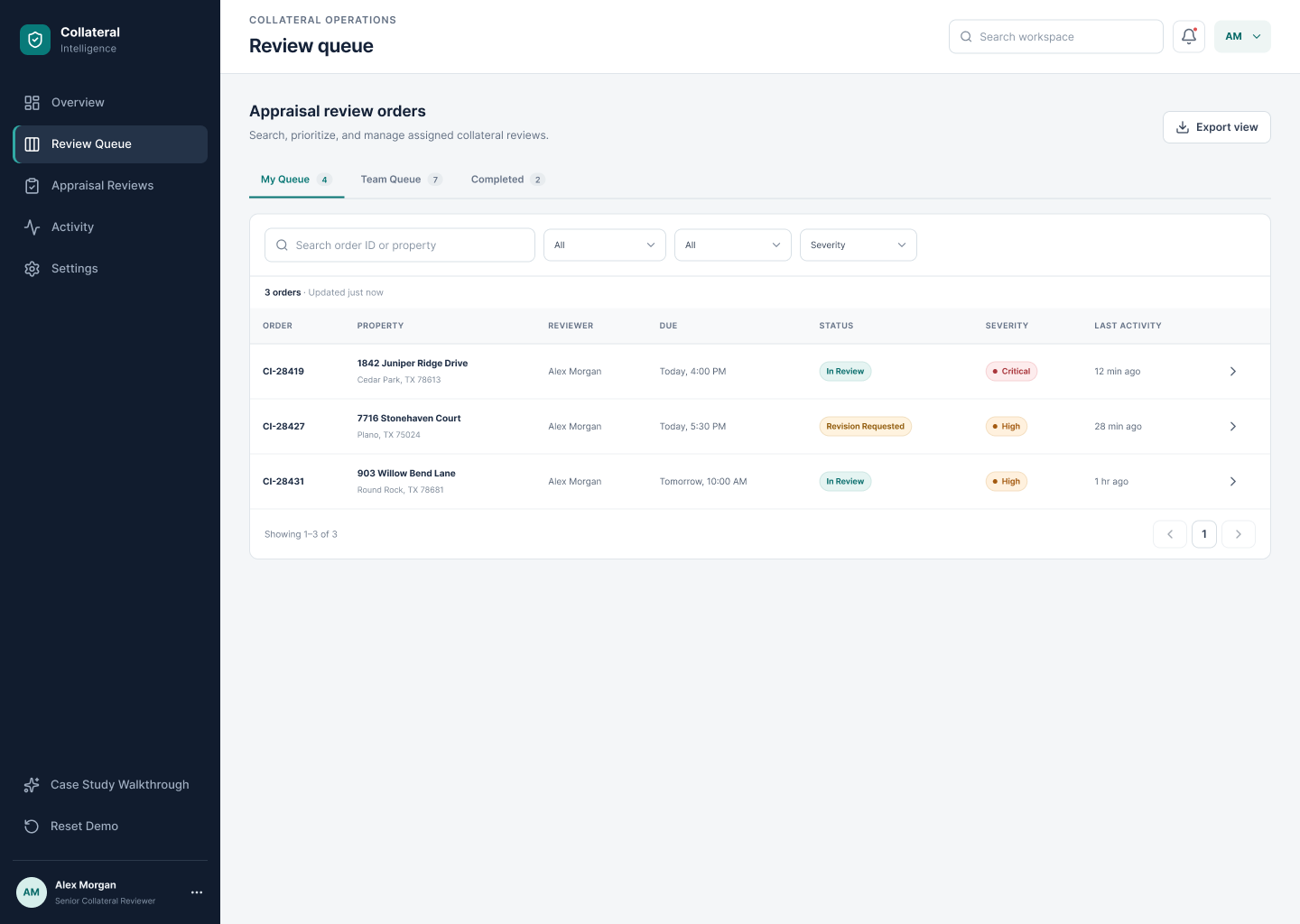
A focused appraisal review queue
A dedicated queue supports the move from operational awareness to selecting a review. This is a reconstructed prototype view, not a production screenshot.
Findings and evidence in one workspace
The central design direction places findings beside supporting evidence so reviewers can inspect the basis of an automated result. The exported Figma prototype illustrates this direction.
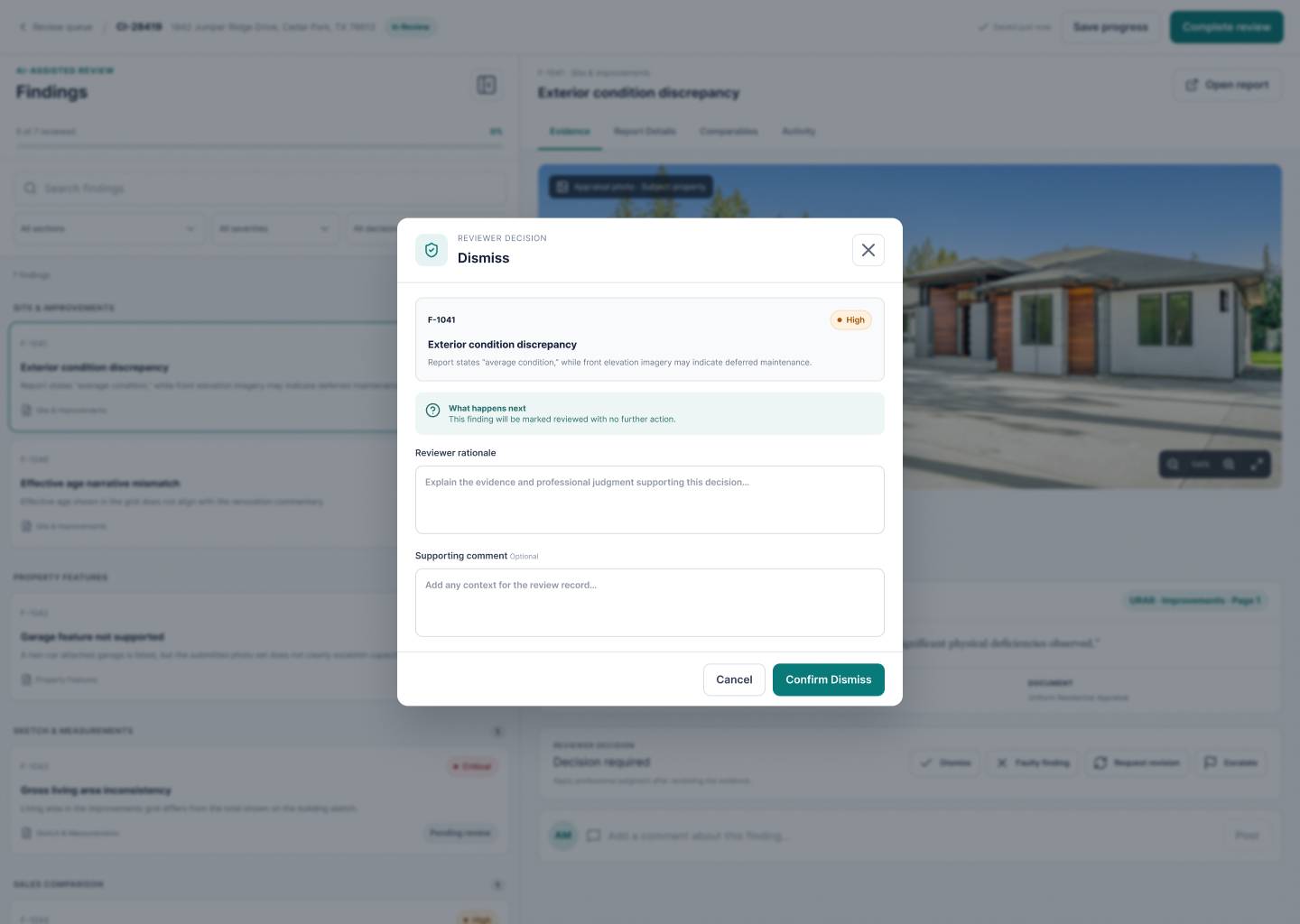
An explicit human review decision
The prototype illustrates an explicit reviewer response and rationale. Detailed dialog requirements are reconstruction choices; they are not claimed as verified original production behaviour.
Designed to make
progress visible.
The business case projected approximately 1,554 hours of manual review saved per month, equivalent to roughly 10 full-time roles. These are estimated capability benefits, not verified post-launch results or savings attributable solely to the UX work. The design contribution established an MVP direction for an in-house review experience with explicit explainability and audit considerations.